


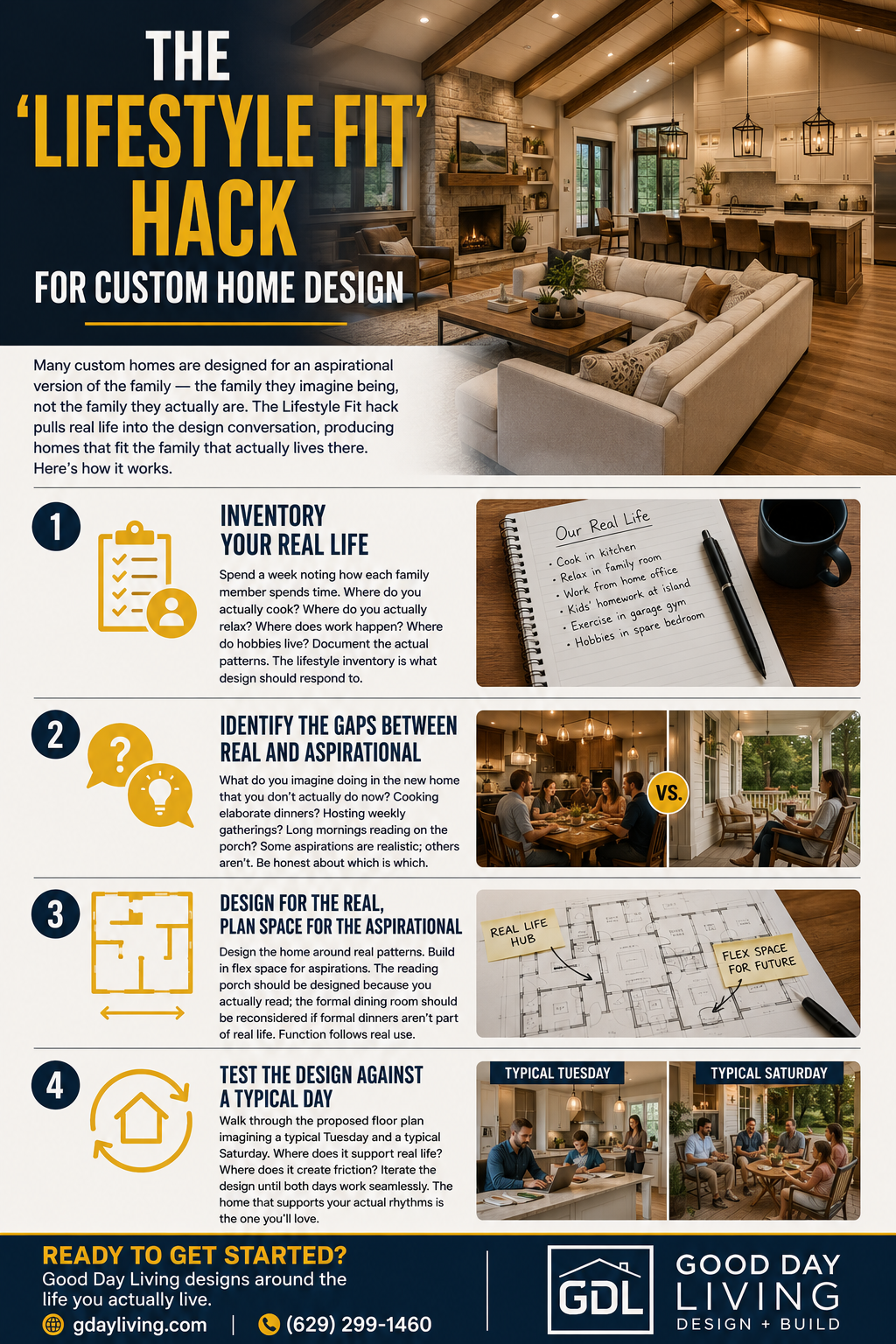
Many custom homes are designed for an aspirational version of the family — the family they imagine being, not the family they actually are. The Lifestyle Fit hack pulls real life into the design conversation, producing homes that fit the family that actually lives there. Here’s how it works.
Step 1: Inventory Your Real Life

Spend a week noting how each family member spends time. Where do you actually cook? Where do you actually relax? Where does work happen? Where do hobbies live? Document the actual patterns. The lifestyle inventory is what design should respond to.
Step 2: Identify the Gaps Between Real and Aspirational
What do you imagine doing in the new home that you don’t actually do now? Cooking elaborate dinners? Hosting weekly gatherings? Long mornings reading on the porch? Some aspirations are realistic; others aren’t. Be honest about which is which.
Step 3: Design for the Real, Plan Space for the Aspirational
Design the home around real patterns. Build in flex space for aspirations. The reading porch should be designed because you actually read; the formal dining room should be reconsidered if formal dinners aren’t part of real life. Function follows real use.
Step 4: Test the Design Against a Typical Day
Walk through the proposed floor plan imagining a typical Tuesday and a typical Saturday. Where does it support real life? Where does it create friction? Iterate the design until both days work seamlessly. The home that supports your actual rhythms is the one you’ll love.
Ready to Get Started?
Good Day Living designs around the life you actually live. gdayliving.com or (629) 299-1460.