


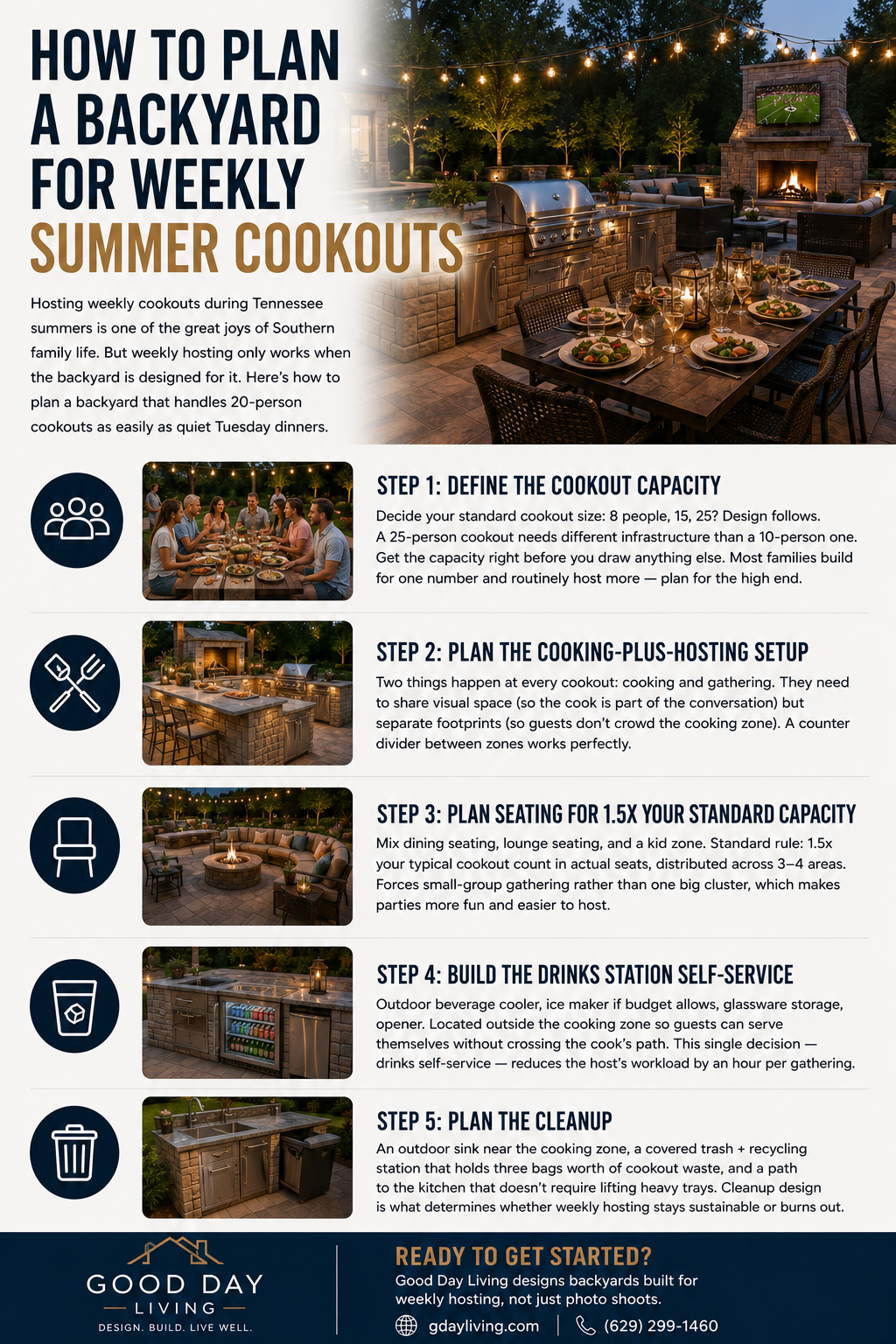
Hosting weekly cookouts during Tennessee summers is one of the great joys of Southern family life. But weekly hosting only works when the backyard is designed for it. Here’s how to plan a backyard that handles 20-person cookouts as easily as quiet Tuesday dinners.
Step 1: Define the Cookout Capacity
Decide your standard cookout size: 8 people, 15, 25? Design follows. A 25-person cookout needs different infrastructure than a 10-person one. Get the capacity right before you draw anything else. Most families build for one number and routinely host more — plan for the high end.
Step 2: Plan the Cooking-Plus-Hosting Setup
Two things happen at every cookout: cooking and gathering. They need to share visual space (so the cook is part of the conversation) but separate footprints (so guests don’t crowd the cooking zone). A counter divider between zones works perfectly.
Step 3: Plan Seating for 1.5x Your Standard Capacity
Mix dining seating, lounge seating, and a kid zone. Standard rule: 1.5x your typical cookout count in actual seats, distributed across 3–4 areas. Forces small-group gathering rather than one big cluster, which makes parties more fun and easier to host.
Step 4: Build the Drinks Station Self-Service
Outdoor beverage cooler, ice maker if budget allows, glassware storage, opener. Located outside the cooking zone so guests can serve themselves without crossing the cook’s path. This single decision — drinks self-service — reduces the host’s workload by an hour per gathering.
Step 5: Plan the Cleanup
An outdoor sink near the cooking zone, a covered trash + recycling station that holds three bags worth of cookout waste, and a path to the kitchen that doesn’t require lifting heavy trays. Cleanup design is what determines whether weekly hosting stays sustainable or burns out.
Ready to Get Started?
Good Day Living designs backyards built for weekly hosting, not just photo shoots. gdayliving.com or (629) 299-1460.