


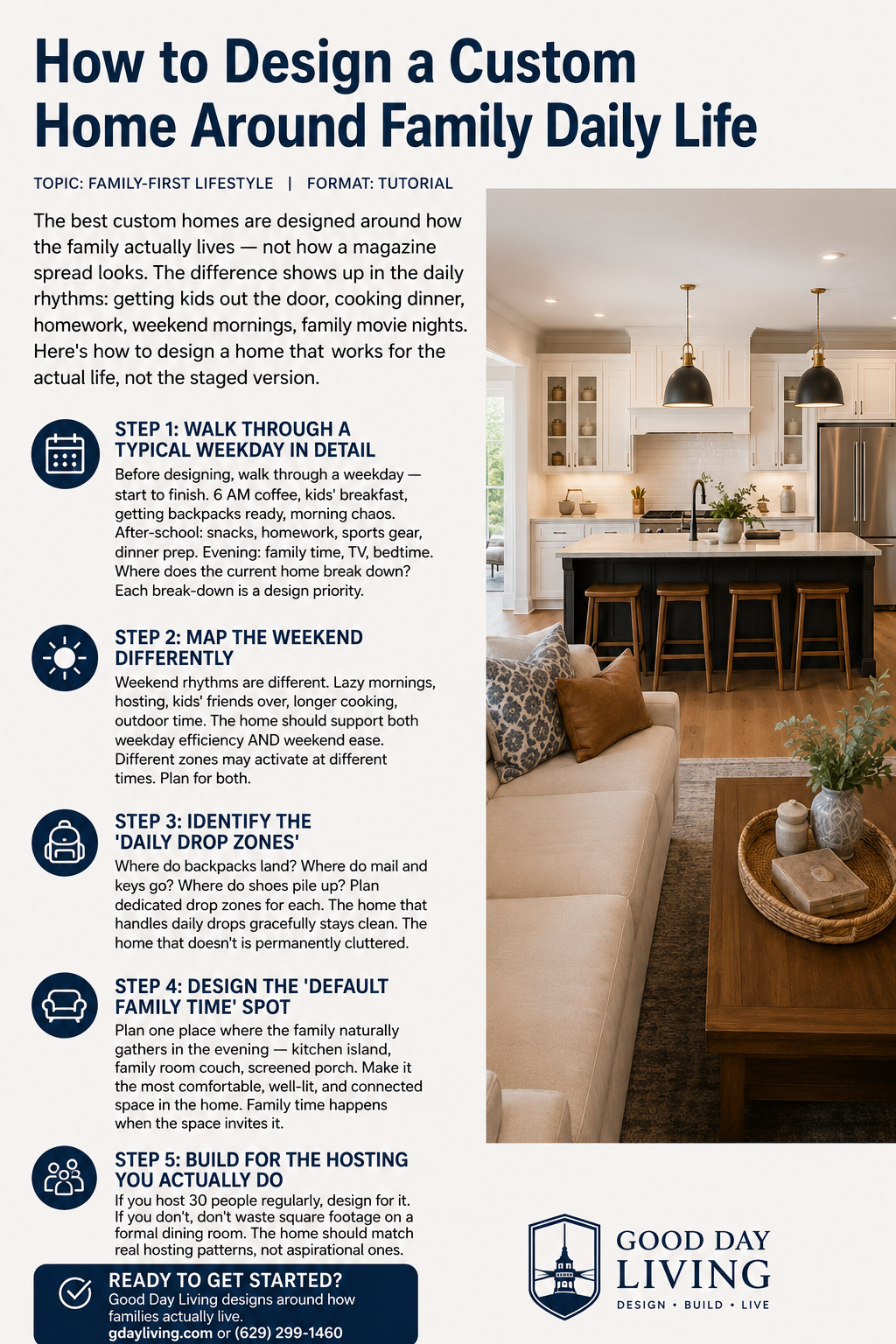
The best custom homes are designed around how the family actually lives — not how a magazine spread looks. The difference shows up in the daily rhythms: getting kids out the door, cooking dinner, homework, weekend mornings, family movie nights. Here’s how to design a home that works for the actual life, not the staged version.
Step 1: Walk Through a Typical Weekday in Detail
Before designing, walk through a weekday — start to finish. 6 AM coffee, kids’ breakfast, getting backpacks ready, morning chaos. After-school: snacks, homework, sports gear, dinner prep. Evening: family time, TV, bedtime. Where does the current home break down? Each break-down is a design priority.
Step 2: Map the Weekend Differently
Weekend rhythms are different. Lazy mornings, hosting, kids’ friends over, longer cooking, outdoor time. The home should support both weekday efficiency AND weekend ease. Different zones may activate at different times. Plan for both.
Step 3: Identify the ‘Daily Drop Zones’
Where do backpacks land? Where do mail and keys go? Where do shoes pile up? Plan dedicated drop zones for each. The home that handles daily drops gracefully stays clean. The home that doesn’t is permanently cluttered.
Step 4: Design the ‘Default Family Time’ Spot
Plan one place where the family naturally gathers in the evening — kitchen island, family room couch, screened porch. Make it the most comfortable, well-lit, and connected space in the home. Family time happens when the space invites it.
Step 5: Build for the Hosting You Actually Do
If you host 30 people regularly, design for it. If you don’t, don’t waste square footage on a formal dining room. The home should match real hosting patterns, not aspirational ones.
Ready to Get Started?
Good Day Living designs around how families actually live. gdayliving.com or (629) 299-1460.