

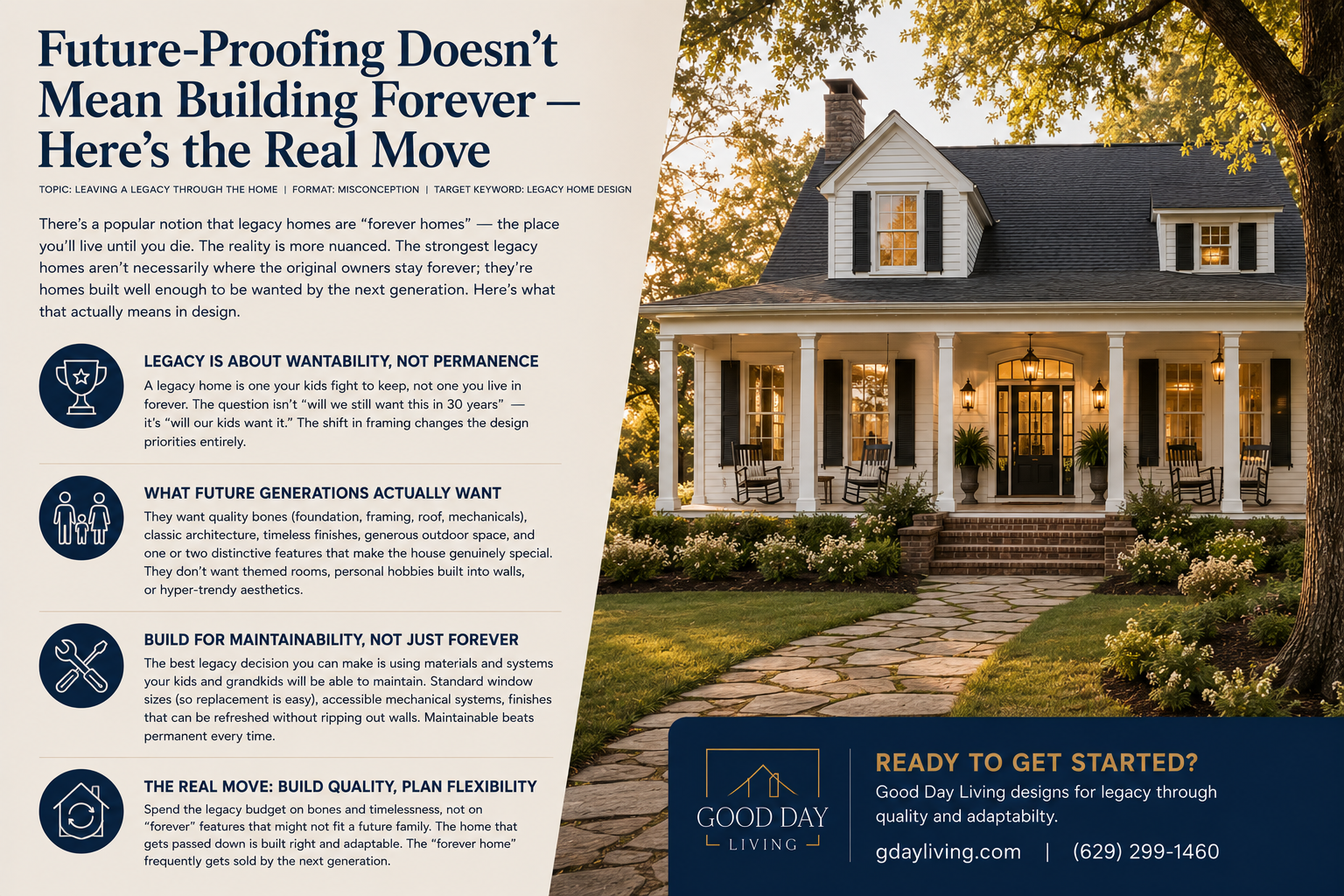
There’s a popular notion that legacy homes are “forever homes” — the place you’ll live until you die. The reality is more nuanced. The strongest legacy homes aren’t necessarily where the original owners stay forever; they’re homes built well enough to be wanted by the next generation. Here’s what that actually means in design.
Legacy Is About Wantability, Not Permanence
A legacy home is one your kids fight to keep, not one you live in forever. The question isn’t “will we still want this in 30 years” — it’s “will our kids want it.” The shift in framing changes the design priorities entirely.
What Future Generations Actually Want
They want quality bones (foundation, framing, roof, mechanicals), classic architecture, timeless finishes, generous outdoor space, and one or two distinctive features that make the house genuinely special. They don’t want themed rooms, personal hobbies built into walls, or hyper-trendy aesthetics.
Build for Maintainability, Not Just Forever
The best legacy decision you can make is using materials and systems your kids and grandkids will be able to maintain. Standard window sizes (so replacement is easy), accessible mechanical systems, finishes that can be refreshed without ripping out walls. Maintainable beats permanent every time.
The Real Move: Build Quality, Plan Flexibility
Spend the legacy budget on bones and timelessness, not on “forever” features that might not fit a future family. The home that gets passed down is built right and adaptable. The “forever home” frequently gets sold by the next generation.
Ready to Get Started?
Good Day Living designs for legacy through quality and adaptability. Reach out at gdayliving.com or (629) 299-1460.