


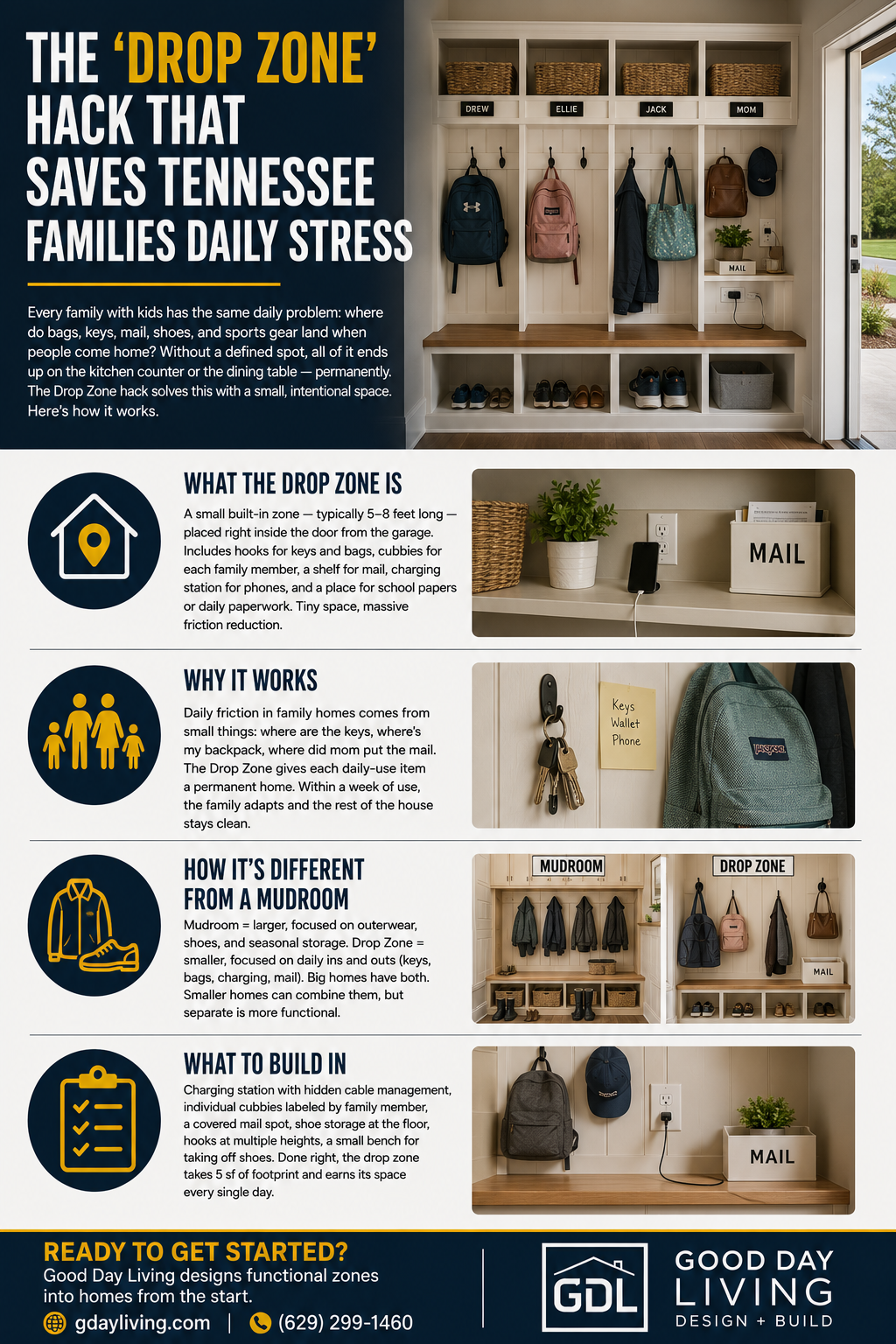
Every family with kids has the same daily problem: where do bags, keys, mail, shoes, and sports gear land when people come home? Without a defined spot, all of it ends up on the kitchen counter or the dining table — permanently. The Drop Zone hack solves this with a small, intentional space. Here’s how it works.
What the Drop Zone Is
A small built-in zone — typically 5–8 feet long — placed right inside the door from the garage. Includes hooks for keys and bags, cubbies for each family member, a shelf for mail, charging station for phones, and a place for school papers or daily paperwork. Tiny space, massive friction reduction.
Why It Works
Daily friction in family homes comes from small things: where are the keys, where’s my backpack, where did mom put the mail. The Drop Zone gives each daily-use item a permanent home. Within a week of use, the family adapts and the rest of the house stays clean.
How It’s Different From a Mudroom
Mudroom = larger, focused on outerwear, shoes, and seasonal storage. Drop Zone = smaller, focused on daily ins and outs (keys, bags, charging, mail). Big homes have both. Smaller homes can combine them, but separate is more functional.
What to Build In
Charging station with hidden cable management, individual cubbies labeled by family member, a covered mail spot, shoe storage at the floor, hooks at multiple heights, a small bench for taking off shoes. Done right, the drop zone takes 5 sf of footprint and earns its space every single day.
Ready to Get Started?
Good Day Living designs functional zones into homes from the start. gdayliving.com or (629) 299-1460.