



The short answer is: Home additions often take about 14 weeks or longer to complete. The longer answer is that most home additions can take as short as a few weeks and as long as a few months. A home addition timeline depends on a few variables, such as the quality of your design and construction team, the size of your build, and more.
Nevertheless, to avoid a year-long home addition (yes, we’ve actually seen home additions take a year or more to complete), we recommend understanding the three phases of construction:
- Phase one: Building the foundation of your new addition
- Phase two: Rough-in work on the addition
- Phase three: Completing construction
If you’re looking to understand what’s involved in each of these three phases, as well as how long each phase takes in the home addition process, you’ve come to the right place.
Join us as our design and construction professionals break down what it takes to build up a new room addition, as well as how long each aspect of the room addition process tends to take.
A breakdown of timelines for home additions
| 1. Phase One: Building the foundation (About 3 weeks long) A. Preconstruction meeting and excavation (Week 1) B. Completing forms and inspections (Week 2) C. Laying concrete (Week 3) 2. Phase Two: Rough-in work (About 5 weeks long) A. Framing (Weeks 4 and 5) B. Roofing and siding (Week 6) C. Utilities installation and home inspections (Weeks 7 and 8) 3. Phase Three: Completing construction (About 6 weeks long) A. Trim and paint (Weeks 9 and 10) B. Insulation and drywall (Week 11) C. Flooring, interior paint, and final inspections/walkthroughs (Week 12 to 14) |
What to expect with your new home addition

If you’re working with a top-quality luxury home construction firm for your new home addition, they should provide you with design plans from either their in-house designer or a contracted architecture firm.
These plans should outline the entire scope of work, including changes that will be made, processes to streamline construction, types of materials, and products to be used in the house.
By using the plans as a guide, your construction project manager can create a schedule for how long the project will take. While every project differs, you can expect all projects to include similar elements.
Let’s take a look at what’s involved in each timeline in a common room or home addition.
Phase One: Building the foundation (About 3 weeks long)
As we embark on our journey through home additions, we start with the foundation. In phase one of a new home addition, your construction team will lay down the concrete foundation for the addition.
The concrete foundation doesn’t take long, but it’s one of the most important aspects of the construction process, because the entire structure rests on the foundation. What’s more, taking the time and effort to prepare, build, and ensure the foundation is safe and sturdy is crucial to ensuring the rest of the project goes off without a hitch.
Preconstruction meeting and excavation (Week 1)
In preparation to build your new home addition, you and your team will discuss the project ahead. If you decide to build your home on your land or someone else’s, your builder team will help you plan realistically how your new addition could impact your daily life during construction.
Your building team will provide you with everything from construction schedules to warranties and any safety concerns to be aware of. What’s more, they’ll also ask what you need to embark on this journey with success.
Once you’ve finished asking all questions, your team will clear and level the space to make room for the concrete foundation where your house will be built.
Concrete forms and inspections (Week 2)
Not “forms”, as in paper forms, but temporary structures that help concrete to harden and shape. Concrete forms are made of wood and help mold the foundation so that it stays in place.
After the concrete forms and steel rebar are set, a certified inspector will check to ensure that the foundation is ready for concrete.
Then, the concrete itself is poured, that is, once the inspector gives the approval to do so. Since the forms and rebar can be adjusted more easily before concrete is poured, ensuring concrete and rebar are in place is essential to constructing a sturdy foundation.
Laying concrete (Week 3)
Concrete week: it’s not particularly exceptional, but it’s an essential part of the construction timeline. Your build team will fill the foundation forms with concrete and allow the concrete to settle.
During this week, your team will likely only stop by to check in on the concrete to make sure it dries and shapes according to plan. Once the concrete dries, your construction on your home addition project can begin.
Phase Two: Rough-in work (About 5 weeks long)
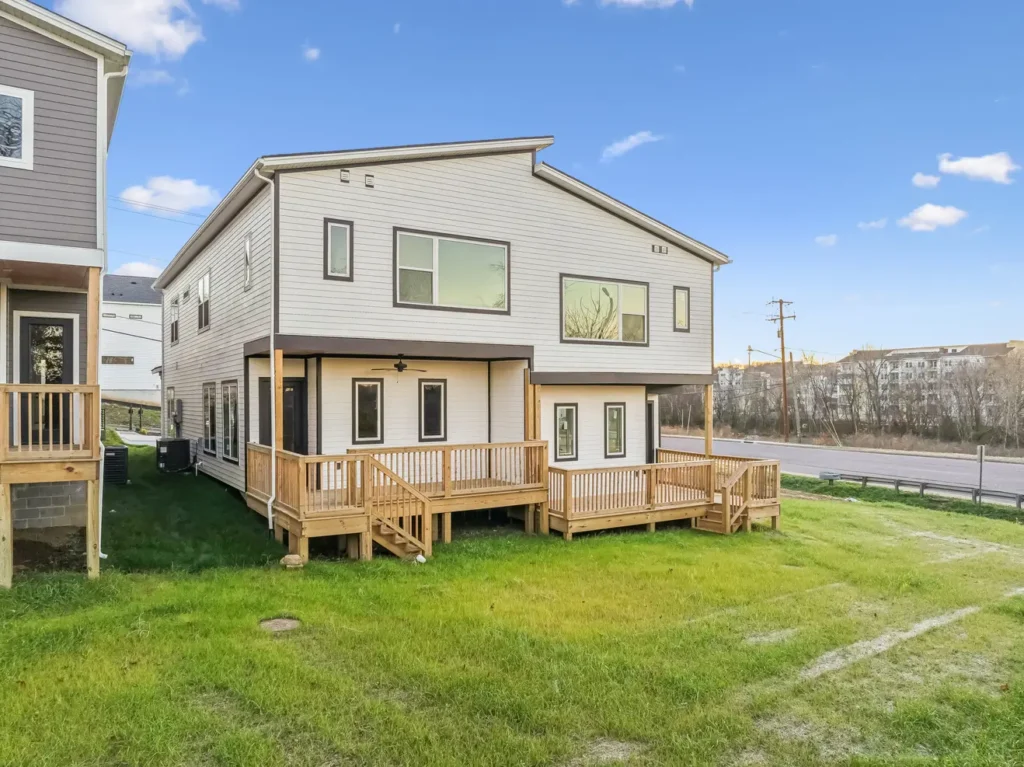
Rough-in work: This phase of work includes plumbing, electrical, and HVAC. Phase two requires careful planning.
During this phase, homeowners begin to see the components of their new home addition come to life. Whether you’re planning a kitchen remodel or adding a second story to your home, rough-in work is where a house starts to take shape.
Framing (Week 4 and 5)
Framing doesn’t take long, but it’s one of the loudest parts of the home addition process. During this process, your team will use wood and lumber to build the structure for floors, walls, and roofing.
During this process, maintaining compliance with building codes is a must. Depending on the size and complexity of the build, your framers will need to consider the placement of doors, windows, vents, and open spaces in and around your home.
Roofing (Week 6)
Roofing is next. The team that’s responsible for roofing will install shingles to protect the structure from inclement weather. Also, your team will install the sheathing, which will provide extra structural support to the walls.
Utilities installation and home inspections (Weeks 7 and 8)
When planning your home addition, installing utilities often requires subcontractors. Once the interior of the home is closed, you’ll likely meet new subcontractors who will be responsible for installing and building the major systems that are located just behind the walls.
For example, plumbers will install water supply and drainage lines, electricians will install electrical boxes, wiring, and hookups, and HVAC teams will add the ducts, vents, and infrastructure to deliver heating and cooling to your home.
After systems and infrastructure for utilities are installed, you’ll likely have one more inspection to ensure everything meets building code requirements.
After the inspection, if anything needs fixing, the construction team will go to work in making any corrections prior to moving forward with finalizing construction.
Phase Three: Completing construction (About 6 weeks long)

Phase three is all about finishing touches. Though the work might appear to be moving more slowly than in phases one or two, progress is being made.
Phase three is all about building the structures, furniture, cabinets, fixtures, and other key components of the interior of your home.
Trim, siding, and paint (Weeks 9 and 10)
In phase three, your home remodel team will complete the exterior siding of your home. Once the trim and paint are complete on the outside of your home, your team will create a final list of items that are still outstanding and need fixing.
Once those items are addressed, fixed, and completed, they’ll complete any last lingering exterior work.
Insulation and drywall (Week 11)
With the exterior finished, we now fill in the walls with insulation to keep the home temperate and comfortable. After the insulation is complete, your team will finish the drywall.
Drywall tends to take longer than insulation, so expect the bulk of this week to focus on completing the drywall.
Flooring, interior paint, and final inspections/walkthroughs (Week 12 to 14)
The last three weeks are about the finishing touches for all things carpentry. The following items will be completed in the last three weeks of the process:
- New plumbing fixtures
- Fans and appliances
- Flooring
- Paint
- Trim
- Decorative molding that frames doors and windows
- And more
In this phase, we recommend two final inspections:
- A home inspection that’s conducted when the project is almost done (to send over a list of items that need fixing)
- A final home inspection that’s conducted after the above inspection’s items have been fixed.
The purpose of these last inspections are to help ensure everything is up to code, that nothing has gone overlooked, and to complete your home addition (pictures included).
Tips from Good Day for better living
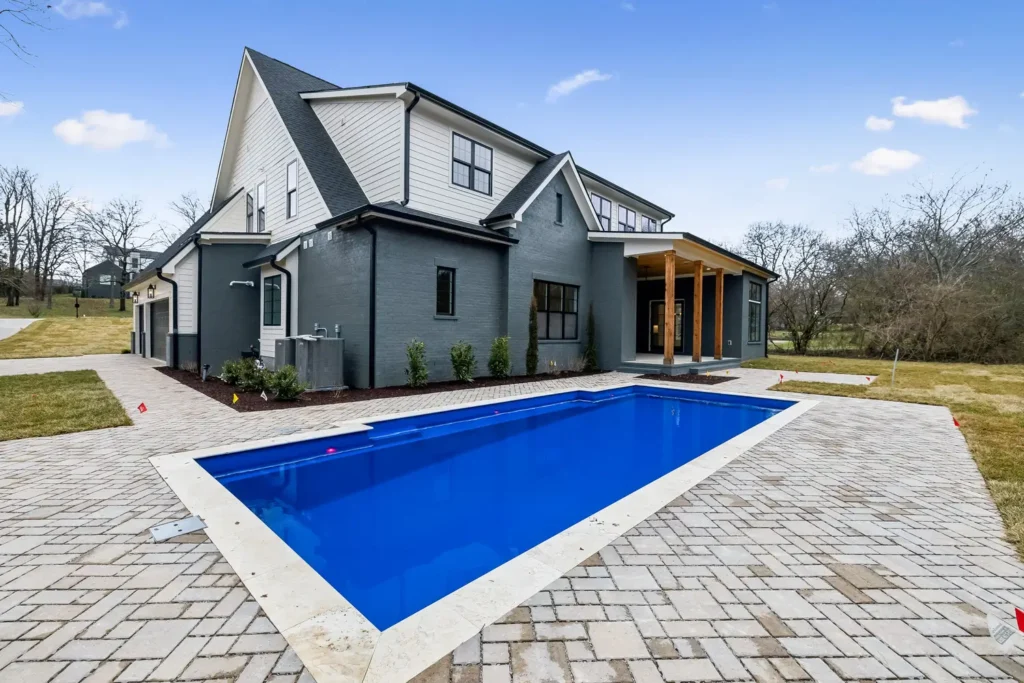
As the market for backyard inground fiberglass pools continues to expand, and as prices continue to rise, if you’ve ever thought about a backyard pool for your home, we recommend building your pool as you build your new custom home.
Doing so can help you save time and money on construction, excavation, grading, and drainage, as all of these can be completed in a single phase.
And, if you’re curious as to what the process looks like, check out what building a backyard pool post-home addition looks like here on our Facebook page. For more helpful insights and inspiration into home renovation timelines and builds, check out our helpful Instagram page.
Considering a home remodel? Not sure where to start?

While we mentioned that a home addition can take about 14 weeks, we want to emphasize that every project is different. Some require more intricate trim, while others use outsourced, craft materials.
Whether you’re opting for a second-story room addition or a backyard pool, make sure to choose your builder wisely. A builder with integrity, experience, and discipline can help guide you through the process so you can get exactly what you had in mind.
If you’re ready to embark on a new home addition in the Middle Tennessee area, we’d love to know how we can help. We have more than 20 years of experience completing home renovations, building custom luxury homes, and shaping pools of all different shapes and sizes.
For a custom quote on your next project, contact us today. We look forward to being of service.