


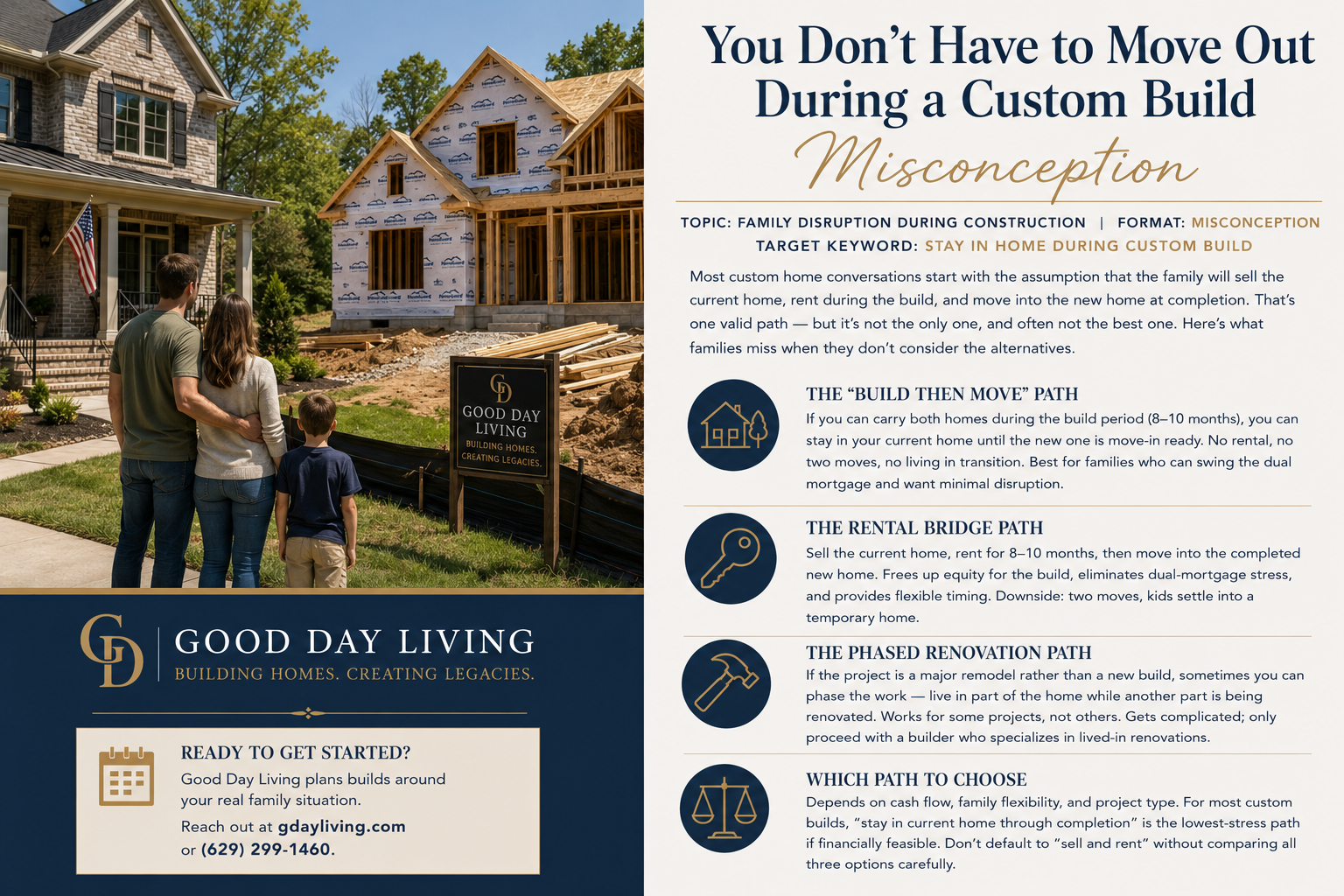
Most custom home conversations start with the assumption that the family will sell the current home, rent during the build, and move into the new home at completion. That’s one valid path — but it’s not the only one, and often not the best one. Here’s what families miss when they don’t consider the alternatives.
The ‘Build Then Move’ Path
If you can carry both homes during the build period (8–10 months), you can stay in your current home until the new one is move-in ready. No rental, no two moves, no living in transition. Best for families who can swing the dual mortgage and want minimal disruption.
The Rental Bridge Path
Sell the current home, rent for 8–10 months, then move into the completed new home. Frees up equity for the build, eliminates dual-mortgage stress, and provides flexible timing. Downside: two moves, kids settle into a temporary home.
The Phased Renovation Path
If the project is a major remodel rather than a new build, sometimes you can phase the work — live in part of the home while another part is being renovated. Works for some projects, not others. Gets complicated; only proceed with a builder who specializes in lived-in renovations.
Which Path to Choose
Depends on cash flow, family flexibility, and project type. For most custom builds, “stay in current home through completion” is the lowest-stress path if financially feasible. Don’t default to “sell and rent” without comparing all three options carefully.
Ready to Get Started?
Good Day Living plans builds around your real family situation. Reach out at gdayliving.com or (629) 299-1460.