


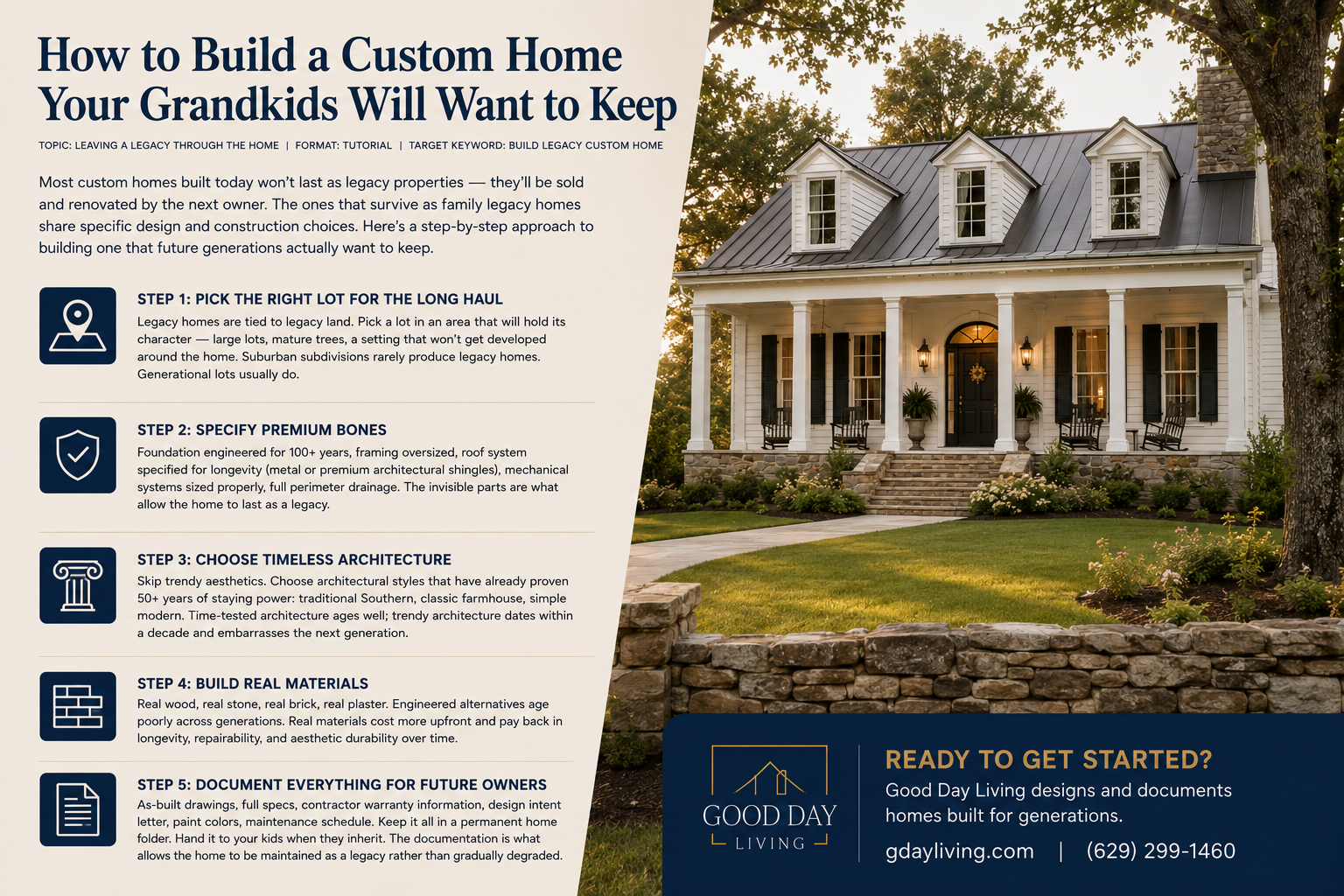
Most custom homes built today won’t last as legacy properties — they’ll be sold and renovated by the next owner. The ones that survive as family legacy homes share specific design and construction choices. Here’s a step-by-step approach to building one that future generations actually want to keep.
Step 1: Pick the Right Lot for the Long Haul
Legacy homes are tied to legacy land. Pick a lot in an area that will hold its character — large lots, mature trees, a setting that won’t get developed around the home. Suburban subdivisions rarely produce legacy homes. Generational lots usually do.
Step 2: Specify Premium Bones
Foundation engineered for 100+ years, framing oversized, roof system specified for longevity (metal or premium architectural shingles), mechanical systems sized properly, full perimeter drainage. The invisible parts are what allow the home to last as a legacy.
Step 3: Choose Timeless Architecture
Skip trendy aesthetics. Choose architectural styles that have already proven 50+ years of staying power: traditional Southern, classic farmhouse, simple modern. Time-tested architecture ages well; trendy architecture dates within a decade and embarrasses the next generation.
Step 4: Build Real Materials
Real wood, real stone, real brick, real plaster. Engineered alternatives age poorly across generations. Real materials cost more upfront and pay back in longevity, repairability, and aesthetic durability over time.
Step 5: Document Everything for Future Owners
As-built drawings, full specs, contractor warranty information, design intent letter, paint colors, maintenance schedule. Keep it all in a permanent home folder. Hand it to your kids when they inherit. The documentation is what allows the home to be maintained as a legacy rather than gradually degraded.
Ready to Get Started?
Good Day Living designs and documents homes built for generations. gdayliving.com or (629) 299-1460.