


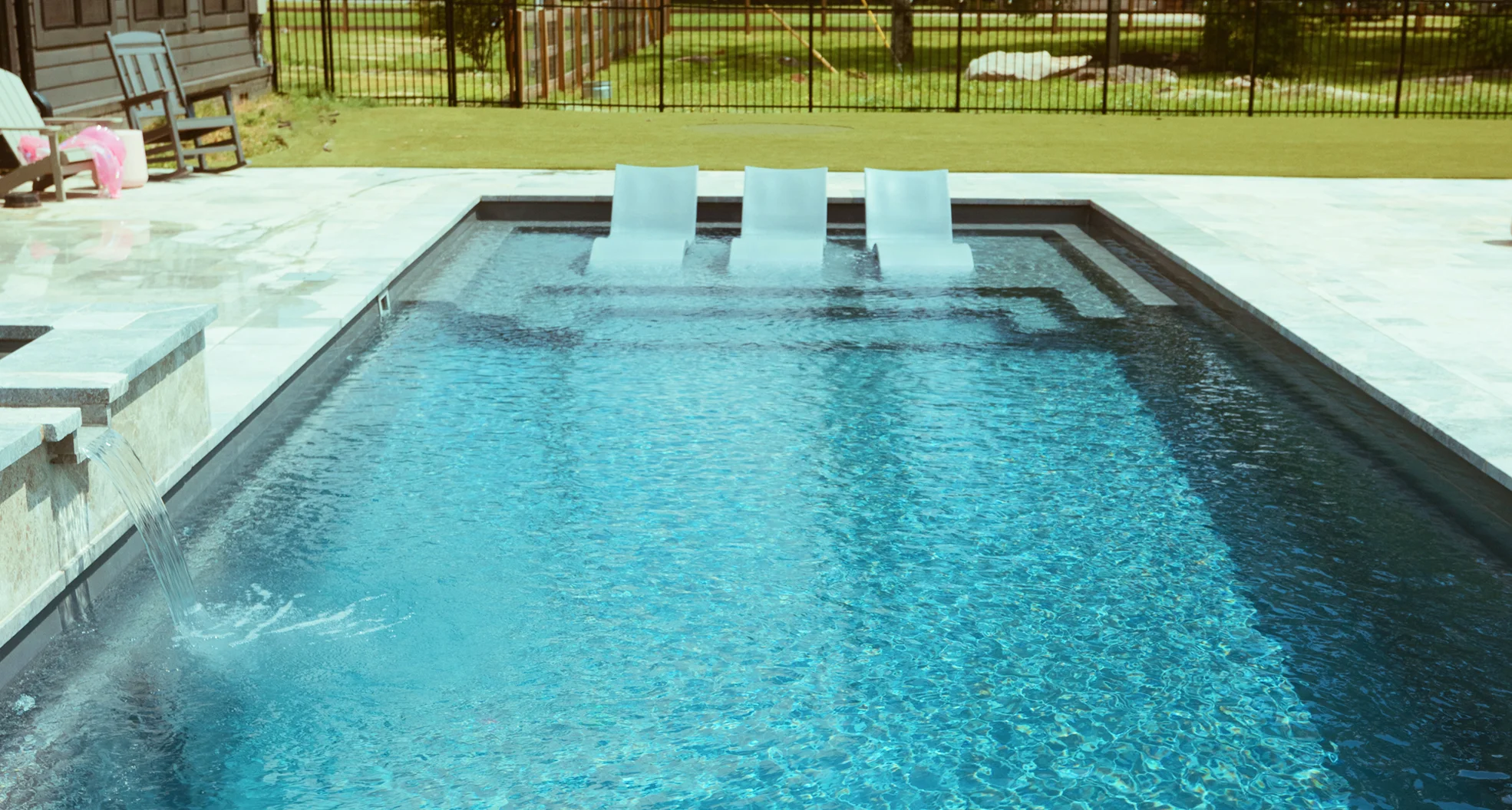
You’re pool shopping. By now, you’ve probably heard of fiberglass and gunite pools. One is made of durable concrete and lasts for years, while the other is more affordable and offers a wider range of design options. Given all the different specs on gunite vs. fiberglass pools, which do you choose?
The answer isn’t always straightforward, especially as we’re faced with a pool market valued at $8.5 billion in 2023 (ProMarketReports.com, 2025) and growing at 5.3% each year. In other words, more decisions mean more problems.
How do you choose the right pool for you? Not to worry, because we’ve got you covered.
In this article, our pool pros will walk you through the advantages and disadvantages of gunite versus fiberglass pools and other must-know information about fiberglass and gunite pools, so you can make a more informed purchase on your next backyard pool.
We’ll also cover:
- The pros and cons of fiberglass and gunite pools
- The durability of gunite and fiberglass pools
- Design, shape, and size considerations for your next backyard pool
- Key facts and information to consider before building and purchasing a fiberglass or gunite pool
What is a fiberglass pool made of?
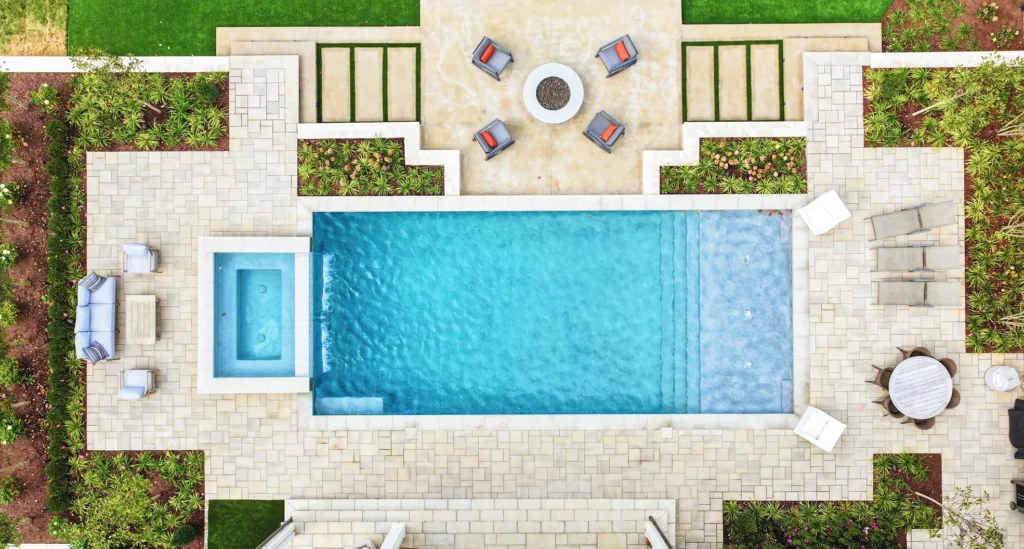
Fiberglass pools: they’ve quickly become one of the most popular pools on the market, partially because of the affordable materials used to help build them. A fiberglass pool is a pool that’s manufactured with a pre-built pool shell that can be installed as an in-ground or above-ground stand-alone pool.
They’re well-known for being smooth because of a gel coating that’s applied over fiberglass material.
What is a gunite pool?
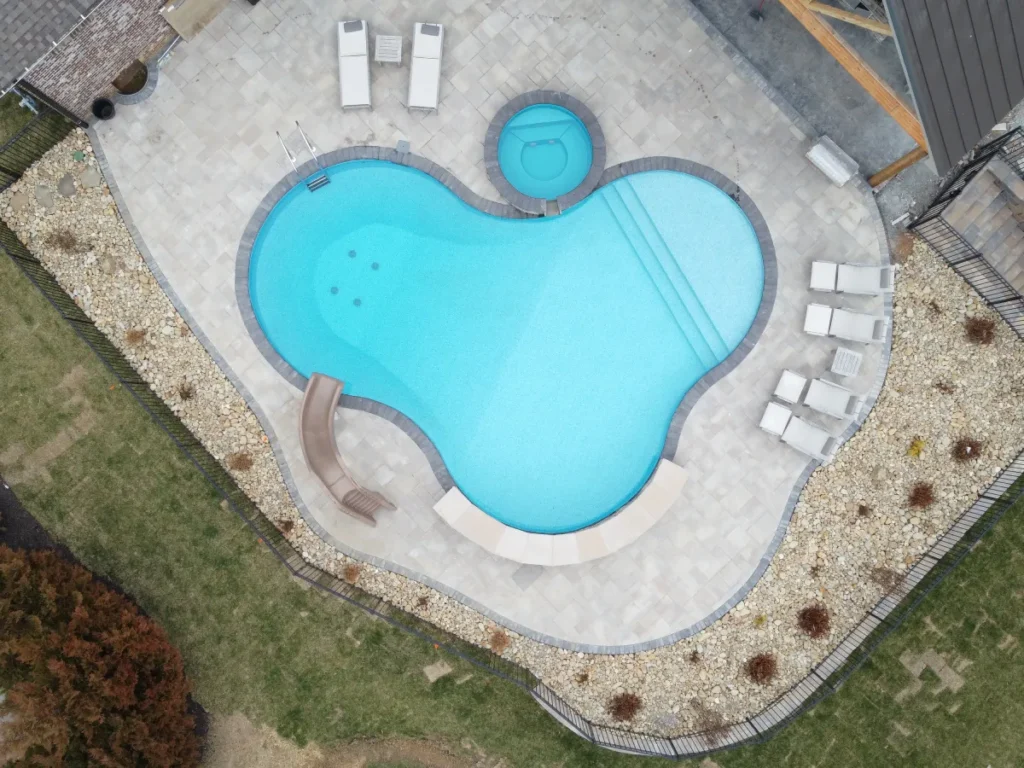
A gunite pool is a concrete pool that’s made from a blend of sand, cement, and water. The cement is applied to the space of the pool through a high-pressure hose.
The concrete from the pool is designed for durability and long-lasting strength. As such, gunite pools are one of the longest-lasting pools on the market.
They’re made to fit any size or shape backyard area, delivering a one-of-a-kind pool that’s big on long-lasting durability and picture-worthy memories.
Advantages and disadvantages of gunite pools
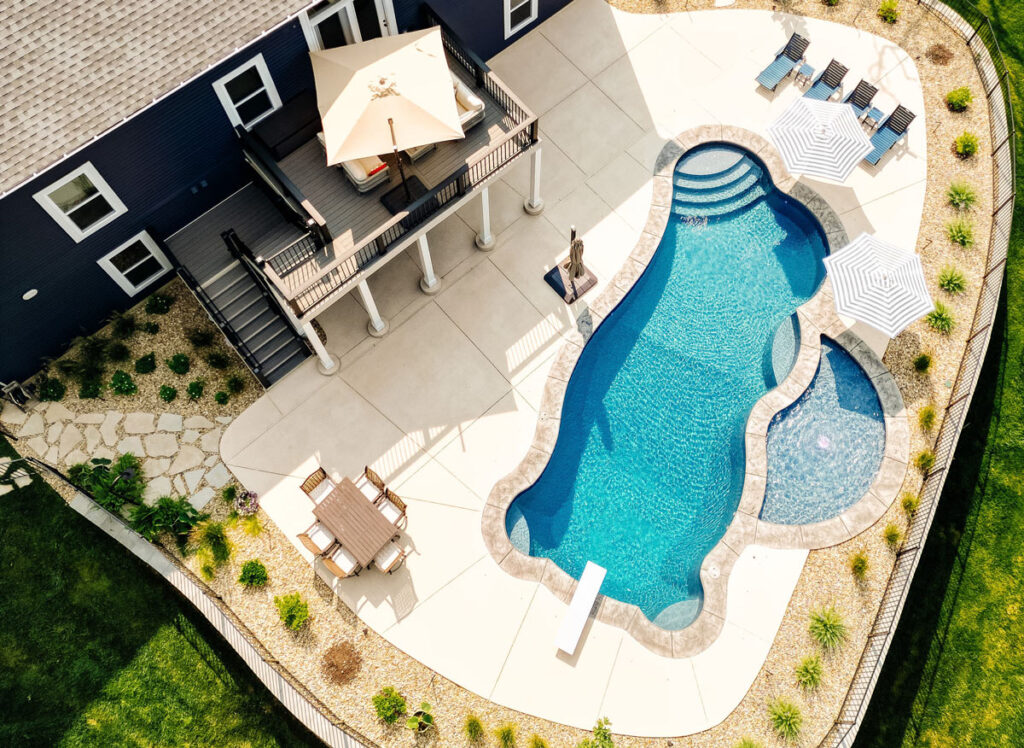
Gunite pools are advantageous to own for the following reasons:
- They can be built and designed in any way you’d like: if you’re looking for a specific shape, depth, or style of pool, gunite pools are an excellent choice. They’re built on site and can be designed in ways that fit with your existing backyard.
- They can include extra features: whether you’re looking for a gunite pool that includes a lap pool, waterfalls, jets, or bench-style seating, a gunite pool can house it.
- They can be built with custom finishes: gunite pools can be built in a range of colors, textures, and styles. Whether you’re looking for a pebble, polished, or plaster finish, gunite pools allow for customization that’s built to last.
The disadvantages of building a gunite pool include the following:
- They tend to be more costly to maintain than fiberglass pools: gunite pools need to be resurfaced every 7-10 years, making them more costly to maintain than fiberglass pools.
- They require more chemicals: Because of the concrete and other materials used, gunite pools need more intensive chemical treatments than other types of pools.
- They take longer to install: Gunite pools tend to take longer to install than other types of pools. The combination of the custom shape, concrete application, and chemical use can sometimes take several weeks or months to complete.
Advantages and disadvantages of fiberglass pools

Fiberglass pools tend to take less time to install than other pools, along with a host of other advantages. Some of the advantages of fiberglass pools include:
- They install very fast: if you’re looking to get a pool up and running quickly, fiberglass pools can be installed in a short two or three days.
- They don’t need a great deal of maintenance: Since fiberglass pools are smooth and non-porous, algae doesn’t stick to their walls. With fiberglass pools, you’ll spend less time cleaning algae off walls and less money on chemicals.
- They’re long-lasting and durable: fiberglass pools stand the test of time against inclement weather, meaning less time and money spent on repairs.
- They come in a range of sizes: they can be built small or large, depending on the mold.
- They’re not as costly as gunite pools: Fiberglass pools tend to be more affordable than custom gunite pools, making them a savvy investment for the pool owner looking for more reasonable pool prices.
A few of the disadvantages of investing in a fiberglass pool include:
- They’re not as flexible as gunite pools: Fiberglass pools are built and manufactured in a facility. As such, they come in a shell shipped to your home. You can think of these pools as pre-built, shell-based pools.
- They’re available in limited supply depending on the season: fiberglass pools are in high demand, which can increase waiting times and cause delays for delivery and installation.
- They’re prone to structural issues: fiberglass pools tend to develop bubbles if not manufactured according to best practices. The great news is that one can buff out the bubbles and ensure a swim-ready pool.
Must-know installation info for gunite vs. fiberglass pools
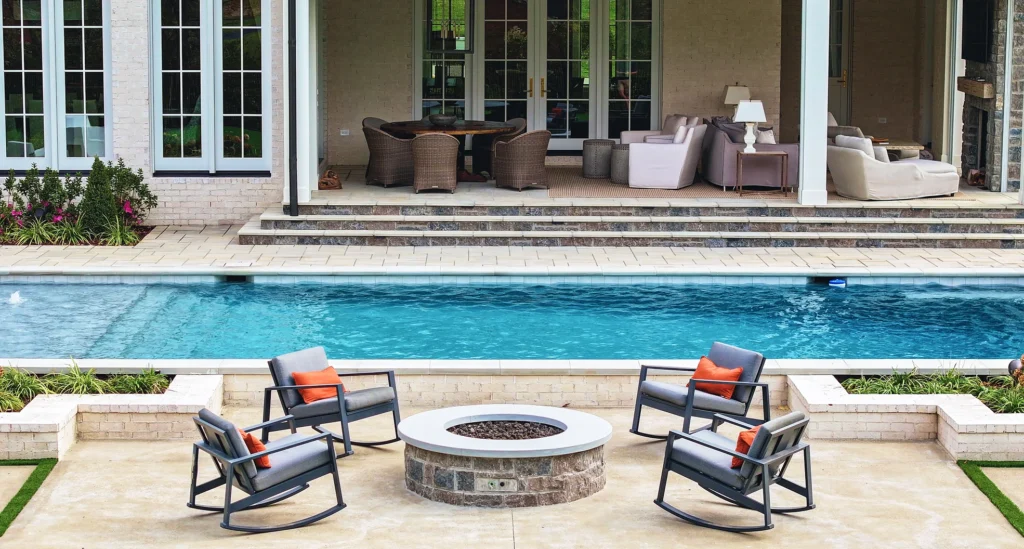
One of the largest differences between gunite and fiberglass pools is the installation process.
Compared to a fiberglass pool, the installation time on a concrete or gunite swimming pool is much longer. With fiberglass pools, since fiberglass pools are pre-built by the manufacturer, all that’s needed is a crane to place the shell in a pre-dug hole where your pool will be built.
With gunite pools, the installation and construction of a gunite pool is completed on site, so the pool installation process can take a few weeks or months, depending on the scale of the installation, design, and build.
How long do fiberglass and gunite pools last?
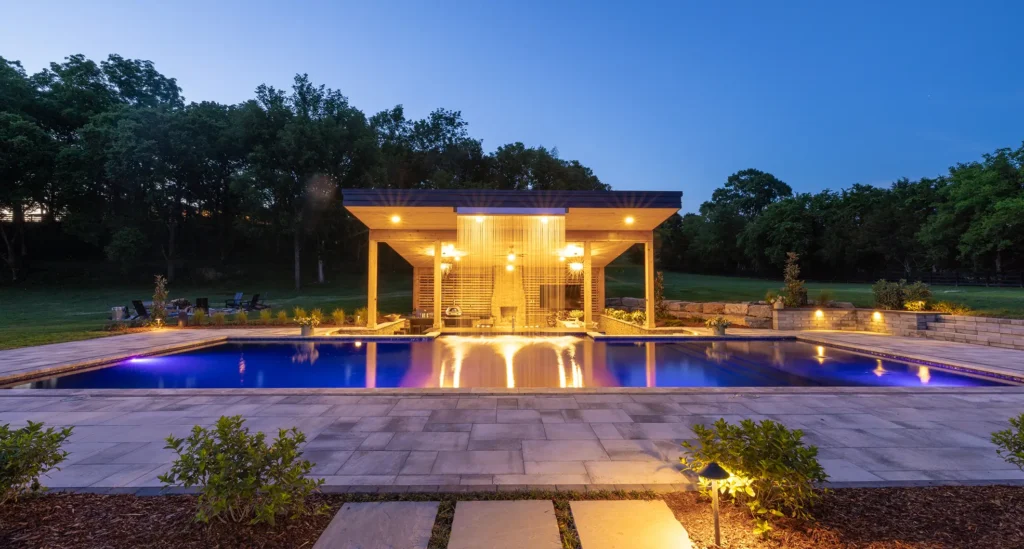
It depends on the pool type. Fiberglass pools can last up to 15-50 years before any resurfacing is needed.
In contrast, gunite pools tend to last seven to 10 years before they need to be resurfaced. Fiberglass pools are a more prudent investment in terms of how long they last.
With that being said, fiberglass pools need resurfacing when cracks occur and when top coats become discolored. Whether you’re opting for a gunite or fiberglass pool for your home, both pools can last for years if given proper and frequent maintenance.
In other words, the lifespan of the pool depends on the care it receives throughout its lifetime.
How do the design, shape, and size of fiberglass and gunite pools compare?
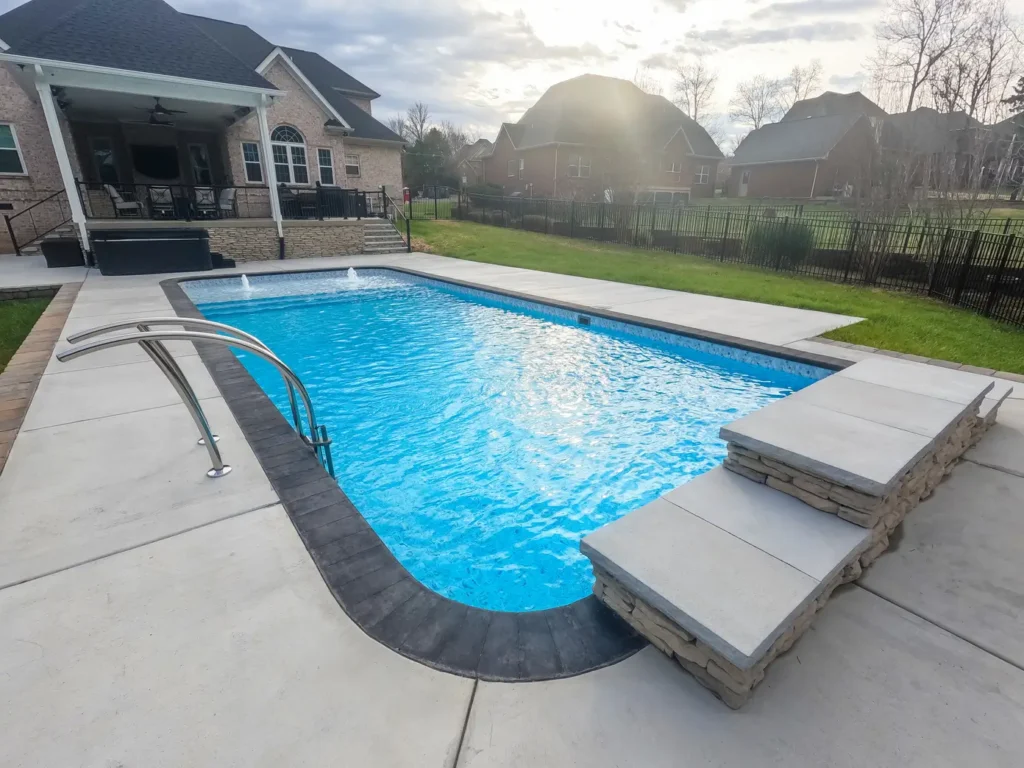
Fiberglass pools come in many different sizes and shapes. The most common shapes that fiberglass pools come in are:
- Rectangular shapes
- Freeform shapes (like kidney pools, which are rounded on each end and curve inward along one side)
- Rectangular pools with semi-circular ends (also known as Roman pools)
What’s more, fiberglass pools come in different sizes, with the smallest sizes ranging from 10 to 14 feet long by 35 to 40 feet wide, with a four to seven-foot depth.
In contrast, gunite inground pools are custom-made and therefore can fit any size or shape backyard. The opportunity for customization is endless with a gunite pool, so the sky is the limit when it comes to the size and shape of a gunite inground pool.
Final words of wisdom on gunite and fiberglass pools
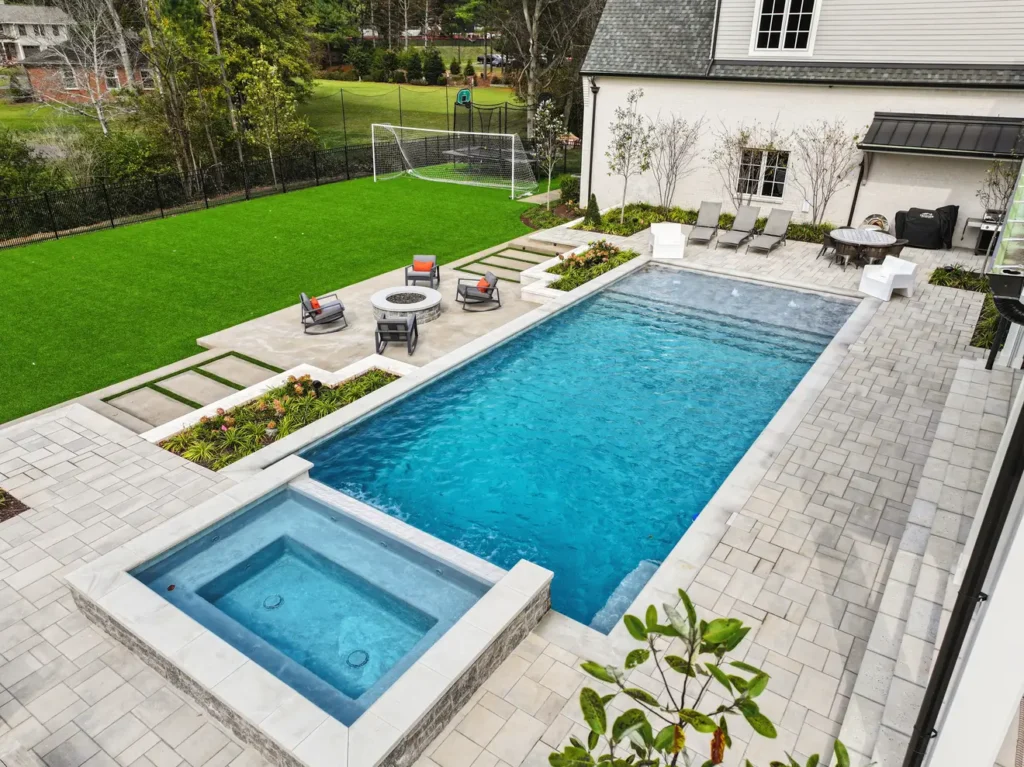
Still stuck on whether to choose a gunite or fiberglass pool? Didn’t read through the contents of this post? Here are the most important points from this article:
- If choosing between gunite or fiberglass pools, consider the time needed to install, design, and build the pool.
- Know that gunite pools require more maintenance than fiberglass pools and tend to cost more than fiberglass pools. But you get more customization and freedom to design the pool of your dreams with a gunite pool.
- Fiberglass pools tend to last longer, are faster to install, and require fewer chemical treatments over the pool’s lifespan. Fiberglass pools are known for being more affordable than gunite pools.
- Gunite pools require more maintenance and care than a fiberglass pool.
Compared to other pool types like vinyl liner pools, gunite and fiberglass pools are long-lasting, durable, and versatile investments that add exceptional value to your home and quality of life.
At the end of the day, your pool is only as healthy as the pool builder you choose and the maintenance you give it. If you’re looking for a new pool for your home and live in the Middle Tennessee area, get in touch with our team.
Our gunite and fiberglass pool installation team has more than 20 years of experience building hand-crafted and shaped pools. With the fiberglass pool market expected to grow over the next decade, you couldn’t have picked a better time to invest in a new backyard pool.
For help with building your new pool — or even if you want to chat about and get help with your next backyard build — don’t hesitate to reach out. We’d be happy to help.